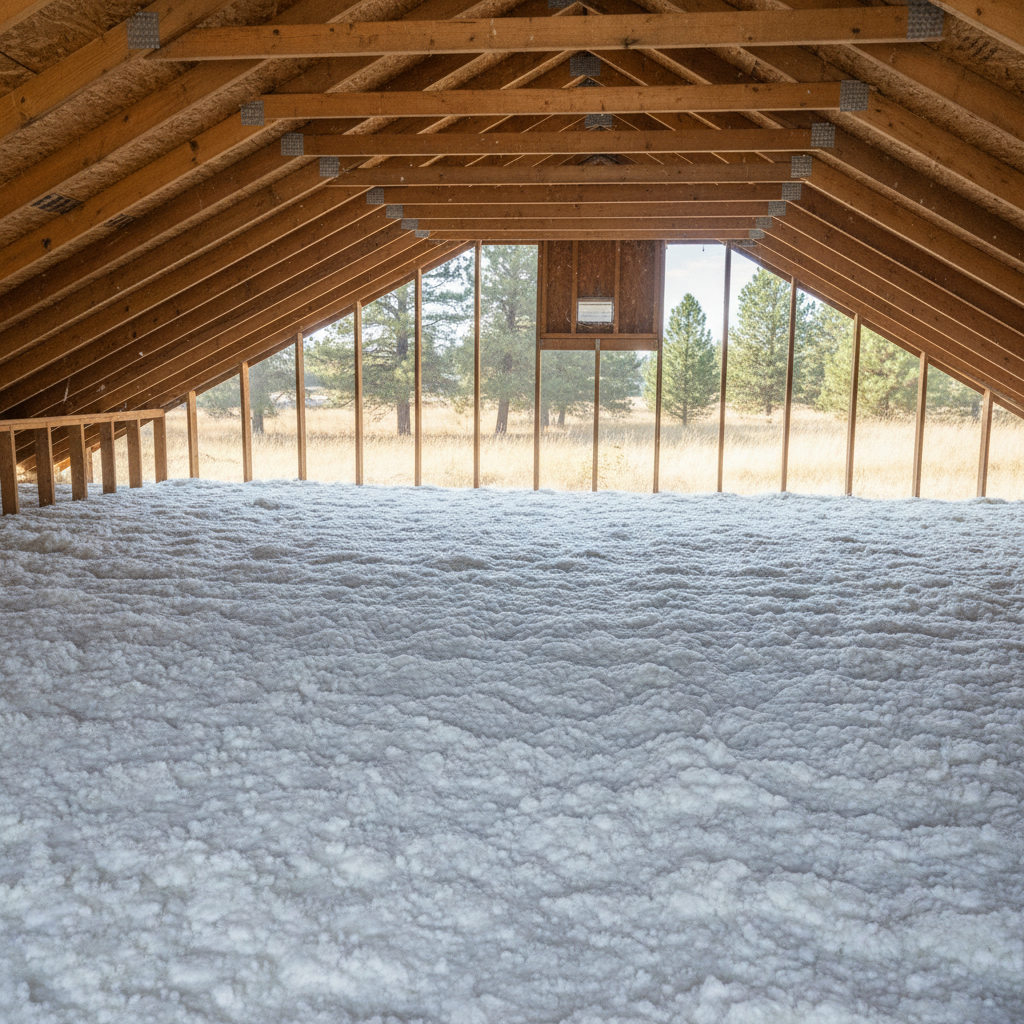
Thinking about upgrading your home's insulation with blown-in material? That's a smart move, especially with our hot Boise summers and chilly winters. But let's be honest, the first thing on most folks' minds is, "How much is this going to cost me?"
You've probably seen some wild numbers floating around online, or maybe you've heard a buddy talk about their project. The truth is, there's no single price tag for blown-in insulation. It depends on a few key things, and I'm here to walk you through what really affects the bottom line so you can budget properly and avoid sticker shock.
What Drives Blown-In Insulation Costs?
When I'm putting together a quote for a homeowner in the North End or out in Kuna, these are the main factors I'm looking at:
- The Type of Material: You've got a couple of main choices for blown-in: cellulose and fiberglass. Cellulose is typically made from recycled paper, treated for fire resistance. It's often a bit denser and can be slightly more expensive per bag, but it's great for sound dampening. Blown-in fiberglass is made from glass fibers and is generally lighter. Both are effective, but their material costs differ.
- How Much You Need (R-Value & Depth): This is a big one. The R-value is how well the insulation resists heat flow. The higher the R-value, the more material you need, and the more it'll cost. For an attic in Boise, we're often recommending R-49 to R-60, especially if you're going from nothing or very little. That translates to a specific depth, usually around 16-20 inches for fiberglass, or even more for cellulose to hit those higher R-values.
- Square Footage of the Area: Pretty straightforward: a bigger attic or wall cavity means more material and more time for the crew.
- Existing Insulation Removal: If you've got old, matted, or contaminated insulation (think rodent droppings or water damage), we'll need to remove it before blowing in new material. This adds labor and disposal costs. It's not a small job; it involves specialized equipment and proper bagging and removal.
- Accessibility of the Space: Is your attic easy to get into? Is it a tight crawl space? Are there a lot of obstructions like ductwork or recessed lighting? The harder it is for my crew to move around and get the hose into every nook and cranny, the more time it takes, and that's reflected in the labor cost.
- Prep Work & Air Sealing: Before we blow in insulation, we always recommend air sealing. This means sealing up any gaps, cracks, or penetrations (like around vent pipes or electrical wires) that let air leak in and out. It's crucial for efficiency, but it's an extra step and cost. We're talking about caulk, foam, and sometimes baffles for soffit vents.
Typical Cost Ranges in Boise, ID
Alright, let's get to some numbers. Keep in mind these are averages for a typical Boise home, and your specific project might vary. These estimates usually include material, labor, and basic prep.
- Attic Insulation (No Removal, R-49 to R-60): For a standard 1,500 to 2,000 square foot attic with easy access, you're generally looking at a range of $1.50 to $2.50 per square foot. So, for a 1,800 sq ft attic, that's roughly $2,700 to $4,500. This assumes we're blowing over existing insulation or into an empty attic.
- Attic Insulation with Removal: If we need to remove old insulation first, add another $1.00 to $2.00 per square foot for removal and disposal. That could push the total for that 1,800 sq ft attic to anywhere from $4,500 to $8,100. It's a significant jump, but often necessary for a clean, effective job.
- Wall Cavity Blown-In (Existing Walls): This is a bit trickier and usually involves drilling holes from the exterior or interior to fill existing wall cavities. For a typical 1,500 sq ft home, you might be looking at $3,000 to $6,000, depending on the wall area, accessibility, and patching required.
Remember, these are ballpark figures. Always get a detailed quote for your specific situation.
What Should Be Included in Your Quote?
When you get a quote from Spray Foam Pros of Boise (or anyone else), make sure it's clear and covers everything. A good quote should itemize:
- Material Cost: Specify the type (cellulose or fiberglass) and the R-value/depth.
- Labor Cost: This covers the crew's time.
- Prep Work: Details on air sealing, baffling for soffit vents, or attic damming.
- Removal & Disposal (if applicable): A separate line item for this.
- Cleanup: What they'll do to leave your home tidy.
- Warranty: What kind of guarantee they offer on their work and the material.
How to Avoid Overpaying for Blown-In Insulation
You don't want to throw money away, and you shouldn't have to. Here's how to be a smart consumer:
- Get Multiple Quotes: This is Insulation 101. Get at least three detailed quotes from reputable local companies. Don't just go with the cheapest; compare what's included.
- Ask for an On-Site Inspection: Any contractor who gives you a firm quote over the phone without seeing your attic or crawl space isn't doing their due diligence. We need to see the space, measure, and identify any challenges.
- Understand the R-Value: Make sure all quotes are for the same target R-value. If one quote is for R-38 and another for R-49, they're not comparable.
- Check References & Reviews: See what other Boise homeowners are saying. A company with a solid track record is usually a safe bet.
- Inquire About Rebates: Idaho Power and other local utilities often have rebates for insulation upgrades. Ask your contractor if they can help you navigate these or if they're familiar with the programs. It can save you hundreds!
- Don't Rush: Don't feel pressured to sign on the spot. Take your time to review the quote and ask questions.
Blown-in insulation is a fantastic investment for your home's comfort and energy efficiency. By understanding these cost factors and knowing what to look for, you'll be well-prepared to make an informed decision and get a fair price for a job well done.