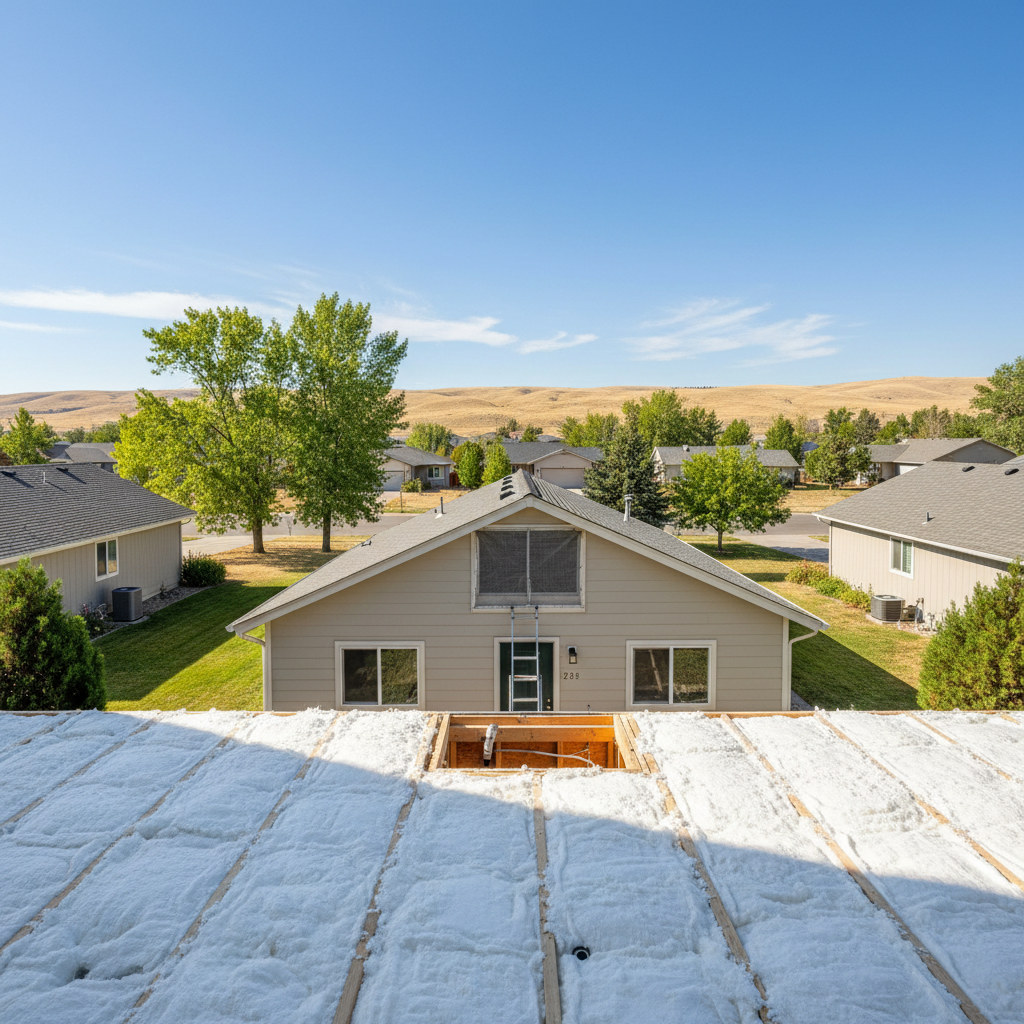
You're probably wondering why I'm even bothering to write about attic insulation again. Doesn't everyone know what it is? Sure, you know the basics, but what you might not realize is just how much Boise's specific conditions impact what kind of insulation works best, and why. It's not just about R-value, you see; it's about our dry climate, our older homes, and even those crazy temperature swings we get.
Boise's Climate Isn't Like Everywhere Else
We've got a truly unique situation here in the Treasure Valley. Hot, dry summers that bake our attics, then cold, sometimes snowy winters. That's a huge swing, and it means your attic insulation has to work hard year-round. Generic advice you find online for, say, a humid climate in the Southeast, just won't cut it here. We don't deal with the same mold and moisture issues in our attics that they do, but we do deal with extreme thermal bridging and heat gain/loss through our ceilings if the insulation isn't up to snuff.
Think about it: in July, your attic can easily hit 140 degrees or more. That heat radiates right down into your living space, making your AC unit work overtime. Then in January, with temperatures dipping below freezing, you lose precious heat right through that same ceiling. Good insulation isn't just about keeping heat in during winter; it's just as much about keeping heat out during our brutal summers. That's why I always tell folks to consider their attic insulation as a year-round performer, not just a winter coat for their house.
Our Homes Have Their Own Stories
Boise's housing stock is pretty diverse, and that means attics come in all shapes and sizes, with different construction methods. You've got the charming bungalows in the North End, built in the early 1900s, often with minimal or outdated insulation. Then there are the ranch-style homes from the 50s and 60s in areas like the Bench, which might have some fiberglass batts that have settled or become compressed over the decades. And of course, the newer builds in Eagle or Meridian, which theoretically should be better insulated, but sometimes still have gaps or areas that could use improvement.
Each of these home types presents its own challenges and opportunities for insulation. An old North End home might have knob-and-tube wiring that we need to consider before blowing in loose-fill insulation, or perhaps a very shallow attic space that makes traditional methods difficult. A 1960s ranch might have old, dusty insulation that's become a haven for pests, needing removal before anything new goes in. We see it all. Knowing what to look for based on a home's age and style is a big part of getting the job done right.
Common Projects We See Around Here
A lot of the work we do at Spray Foam Pros of Boise involves improving existing attic insulation. It's rarely a brand-new install unless it's a custom build. Here are a few common scenarios:
- Adding to existing insulation: Many homes, especially those built before the 2000s, simply don't have enough R-value by today's standards. We'll often blow in more cellulose or fiberglass over what's already there, bringing it up to recommended levels for our climate (R-49 to R-60 is a good target).
- Insulation removal and replacement: If you've had a rodent problem, water damage, or just really old, ineffective insulation, sometimes the best course of action is to remove everything and start fresh. This lets us seal air leaks properly before installing new, high-performance insulation like spray foam or dense-packed cellulose.
- Sealing air leaks: This is huge, and often overlooked. Insulation slows heat transfer, but air sealing stops air movement. We find countless gaps around plumbing stacks, electrical wires, recessed lights, and attic hatches. Sealing these up with caulk or foam makes a massive difference in comfort and energy efficiency, regardless of the insulation type.
- Ventilation improvements: Sometimes it's not just about the insulation, but how the attic breathes. Proper soffit and ridge venting are critical for preventing moisture buildup and keeping the attic cooler in summer. We're always checking for blocked vents or inadequate airflow.
Why Local Expertise Isn't Just a Buzzword
Look, anyone can read a manual and install insulation. But knowing the nuances of Boise's climate, understanding the common construction styles of homes built here over the last century, and recognizing the specific issues that crop up in our area – that's where local expertise really shines. We're not just selling a product; we're providing a solution tailored to your home and our environment.
A contractor who's been working in Boise for years has seen how different insulation types perform through our hot summers and cold winters. They know the tell-tale signs of an under-insulated 1970s split-level versus a 1920s craftsman. They understand the local building codes and what the city inspectors are looking for. You're not just getting insulation; you're getting the confidence that the job is done right for your home, in your town. Don't settle for generic advice when your comfort and energy bills are on the line.