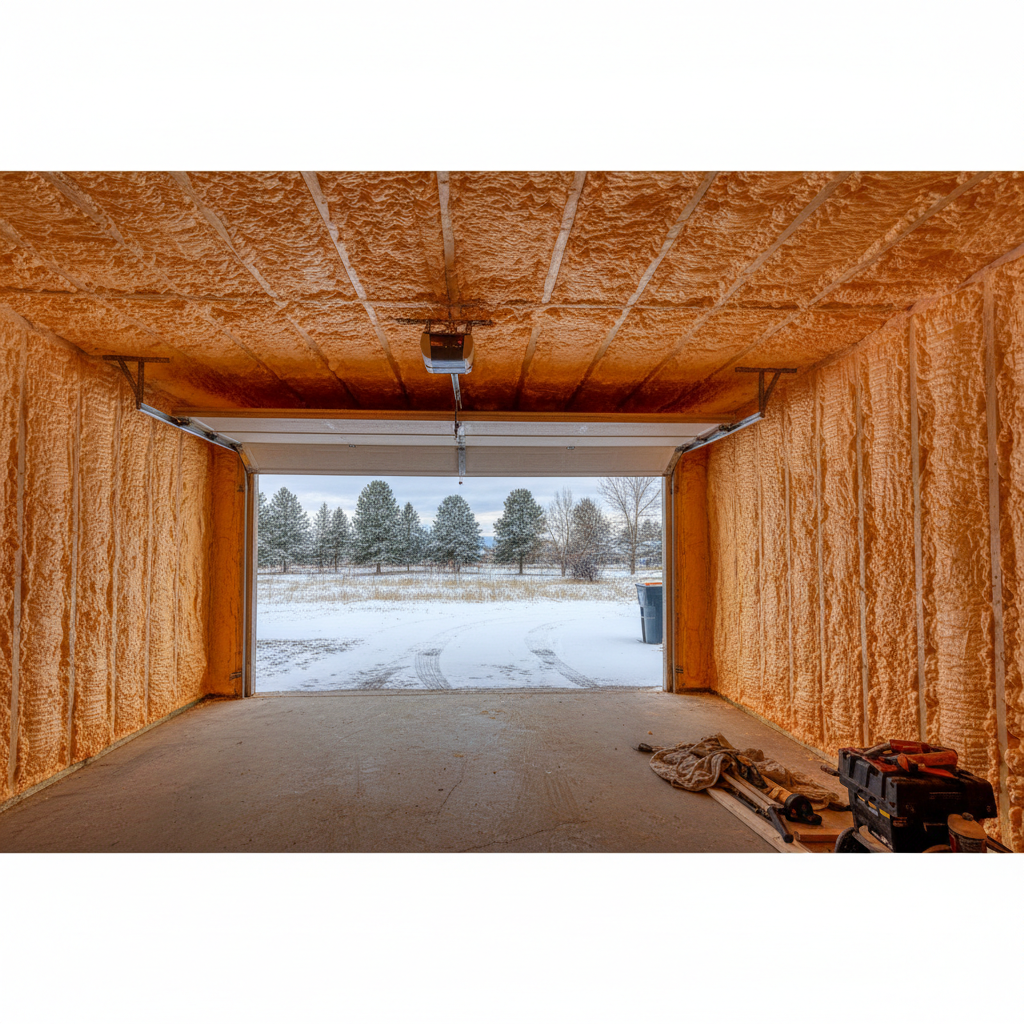
Winters in the North End bring very cold temperatures, while other seasons bring mild conditions. The difference usually comes down to how well your house handles Boise temperature swings. We experience freezing valley inversions in January and triple-digit dry heat by July, and that puts serious stress on your walls and roof deck. Closed cell spray foam provides airtight thermal protection for homes in Boise, ID. Keeping that system performing at its peak takes a little year-round attention from property owners.
Why Boise Weather Dictates Your Foam Installation Schedule
Closed cell spray foam cannot be applied in any weather condition because the chemicals are sensitive to temperature. For closed cell spray foam to cure right, the surfaces we are spraying need to stay within a specific warmth range, usually above 50 degrees Fahrenheit. Late spring, summer, and early fall are the best times for scheduling a project in Boise, ID. If a freezing unheated warehouse in Garden City is sprayed during December, the foam will not rise properly, and the result will be a brittle mess instead of a solid air barrier.
Humidity is also an important factor during application. While closed cell foam handles moisture well once it is cured, high relative humidity during application can interfere with the chemical reaction. The Treasure Valley experiences dry summers, which provide good working conditions for most of the season. Property owners should not wait until the first heavy frost to call Spray Foam Pros of Boise for an exterior or unconditioned space upgrade.
Protecting Your Investment Through the Seasons
Once the closed cell spray foam is in, it requires very little maintenance, but homeowners still need to keep an eye on things. Closed cell spray foam acts as its own vapor retarder, which is effective for stopping winter condensation issues, but it also means you need to watch out for roof leaks or plumbing drips. If water gets trapped behind a finished wall because of a roof leak, the foam will not let it dry out quickly into the room. Check your attic and crawlspace after heavy spring rains or when the snow starts melting off the foothills in Boise, ID.
Homeowners across Boise should also protect the closed cell spray foam from UV rays. If you have exposed closed cell spray foam in an open garage or a pole barn, do not leave it sitting in direct sunlight through the windows. Ultraviolet light breaks down the polyurethane over time, turning the surface powdery and yellow. A simple thermal barrier coating or paint layer fixes this completely and keeps your warranty intact.
Working With Spray Foam Pros of Boise
When you are ready to tackle a new insulation project or add to what you already have, call Spray Foam Pros of Boise. Our team knows local building codes, we know how our local soil and framing settle over time, and we will not try to sell you something your house does not need. Keeping your home comfortable in this valley should not be a second job. Get the prep right, watch the thermometer, and let your insulation do the heavy lifting all year long. For homes and businesses in Boise, Spray Foam Pros of Boise provides Spray Foam Insulation services.