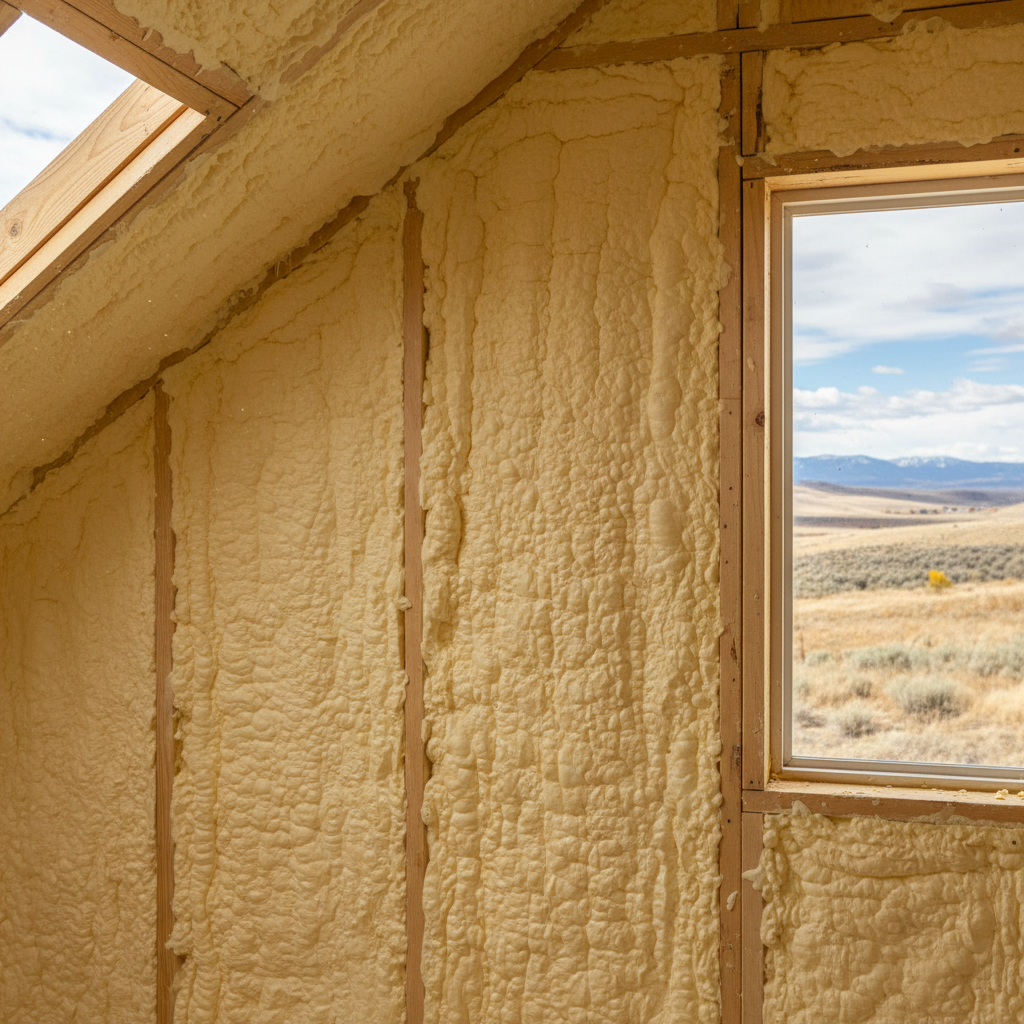
Alright, let's talk about closed-cell spray foam. I get a lot of calls from folks in Boise wondering if it's the right move for their place, and what exactly goes into it. It’s a powerful insulator, no doubt, but it’s not always a DIY job, and there are some things you absolutely need to understand before you even think about starting.
Before the Project: Planning & Prep
First off, why closed-cell? Well, it's dense. Really dense. It creates an incredible air seal, adds structural rigidity to walls, and it's a vapor barrier. That last part is huge here in Boise, especially with our temperature swings and the potential for moisture issues in crawl spaces or basements. You don't want condensation building up where it shouldn't be.
Before you do anything, figure out where you want to use it. Attics, crawl spaces, rim joists, pole barns – these are common spots. If you're building new or doing a major renovation, it's a no-brainer for exterior walls too. But if you're retrofitting existing walls, it gets tricky. Closed-cell expands, and if you don't have a clear cavity, you can bow out drywall or even siding. That's a mess you don't want.
Now, about DIY. Can you buy a small two-part kit from a big box store? Sure. For a tiny patch job, sealing a few small gaps, or insulating a dog house, those kits can work. But for anything larger than, say, a few square feet, you're quickly going to be in over your head. These kits are expensive per square foot, they're messy, and getting an even, consistent application without voids or over-spraying is really hard for an amateur. Plus, the chemicals involved require proper PPE – respirators, gloves, eye protection. This isn't just about comfort; it's about safety.
If you're thinking about insulating an entire attic or crawl space, or even a medium-sized room, you need to call a professional. Seriously. The equipment is specialized, the training is extensive, and the material itself is unforgiving. If you mess up, it's not like pulling out a batt of fiberglass. This stuff cures hard, and removing it is a nightmare, often involving cutting out entire sections of drywall or subfloor.
During the Project: What to Expect
If you've decided to go pro – and for most significant projects, that's what I recommend – here's what you can expect. We'll start with a thorough inspection of the area. We're looking for any existing moisture issues, electrical hazards, or anything that needs to be addressed before spraying. For example, in older homes around the North End, we sometimes find knob-and-tube wiring, which needs to be handled carefully or updated before insulation.
Preparation is key. We'll seal off the work area, cover any surfaces that shouldn't get overspray (because trust me, it goes everywhere), and ensure proper ventilation. This isn't just for us; it's for your home's air quality. You'll need to vacate the house for at least 24 hours, sometimes longer, depending on the specific product and ventilation. Don't try to sneak back in early; those fumes are no joke.
When we're spraying, it's a controlled chaos. The spray gun mixes two chemicals that react instantly, expanding and hardening. We apply it in thin layers, building up to the desired R-value. It's a skill, knowing how much to apply, how fast to move, and how to get into all those nooks and crannies without over-applying or missing spots. You'll hear the equipment, you'll smell the chemicals (even with ventilation), and you'll see the foam rapidly expanding.
After the Project: Curing & Beyond
Once the spraying is done, the foam needs to cure. This is why you're out of the house. The curing process releases off-gassing, and while modern foams are much better than older versions, you still want that air to clear out completely before you and your family return. We'll give you a clear timeline for re-entry.
After it's cured, closed-cell foam is incredibly durable. It's not going to settle or sag like some other insulation types. It's resistant to mold and mildew, and pests generally don't like to tunnel through it. You'll notice a difference almost immediately in your home's comfort and how your HVAC system runs. Less drafts, more consistent temperatures, and often, a quieter home because of the sound dampening properties.
Maintenance? There's not much to it once it's in. Just make sure it's not exposed to direct sunlight or left uncovered in areas where it needs a thermal barrier (like an attic floor or crawl space ceiling, depending on local codes). If you ever need to run new wiring or plumbing through it, you'll have to cut it out. It's not impossible, but it's a bit of a chore.
So, there you have it. Closed-cell spray foam is a fantastic product for insulating your Boise home, offering superior performance. But for anything beyond a tiny repair, save yourself the headache, the mess, and the potential for a ruined project. Call a local pro like Spray Foam Pros of Boise. We've got the gear, the experience, and the know-how to get it done right, safely, and efficiently.