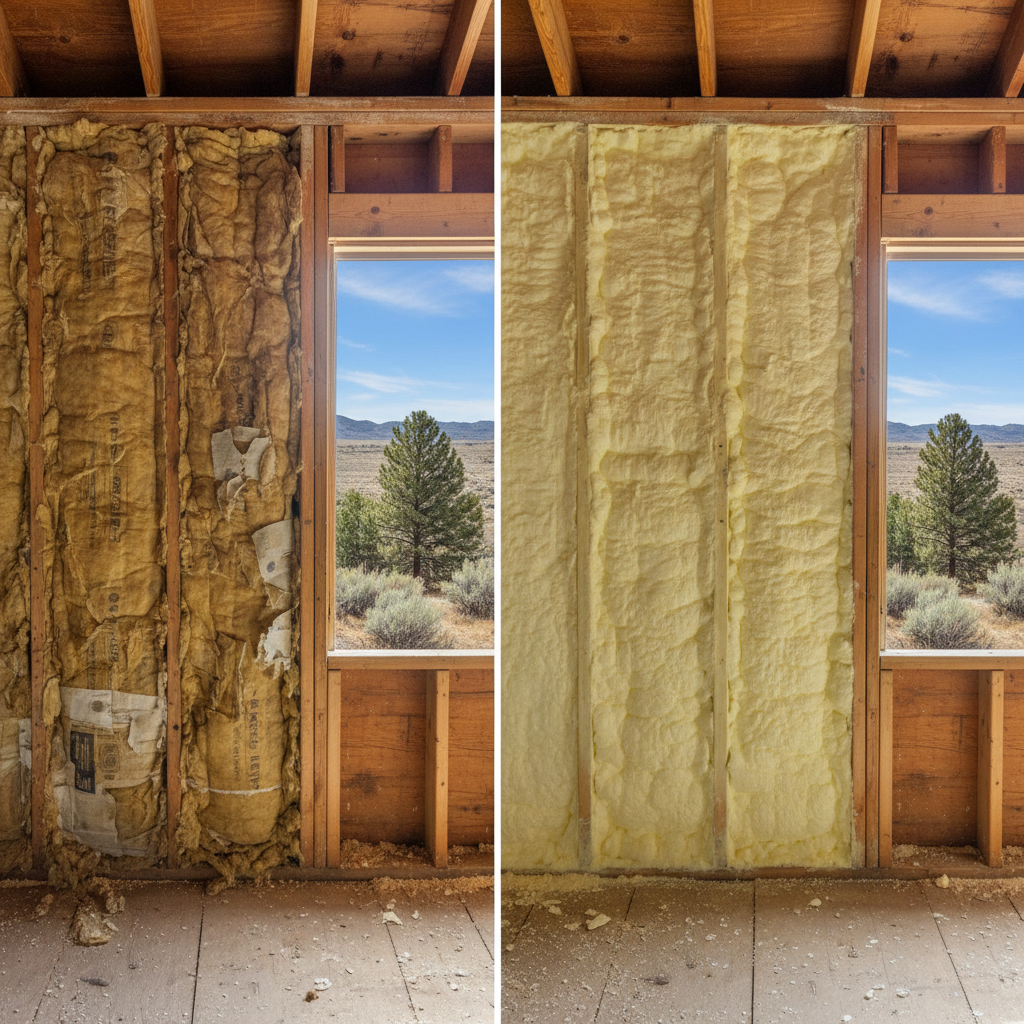
Property owners in Boise, ID often look at their monthly energy bill during a scorching Boise July or a freezing January and wonder where all the conditioned air is escaping. Open cell spray foam is a reliable choice for stopping drafts and tightening up your home envelope. Property owners frequently get stuck when they have to choose between different approaches to applying open cell foam, especially when dealing with the local semi-arid climate and shifting seasonal extremes in Boise, ID.
Spray Foam Pros of Boise sees homeowners wrestling with these exact insulation choices. The two main ways people apply open cell foam include standard cavity fill versus a flashed-in hybrid method combining rigid foam or localized barriers. Comparing them comes down to looking at cost, how they handle moisture, long-term durability, and what they look like once installed in a typical Treasure Valley attic or wall assembly.
The Cost Breakdown
Budget dictates most projects in Boise, ID. A standard, full-cavity open cell fill is usually the more budget-friendly route upfront. Because open cell foam expands rapidly and uses less material by volume than closed cell, initial material costs stay manageable.
A hybrid or flashed approach costs more. Homeowners pay for extra labor and secondary materials. When trying to insulate an older home in the North End with tricky framing and weird vapor dynamics, spending a bit more on the front end usually saves you from headaches later.
Durability and Moisture in the Boise Climate
Boise gets dry heat in the summer, but winters bring freeze-thaw cycles and indoor humidity that can sneak into wall cavities. Standard open cell foam acts as an air barrier, but it is permeable to moisture vapor.
- Standard open cell fills the entire depth of the stud bay, giving sound dampening against traffic noise on streets like State Street, but it lets vapor move through.
- Hybrid applications add a vapor-retarding element or a thin layer of closed-cell foam first, stopping condensation before the open cell takes over the rest of the cavity.
If you choose a standard full-fill open cell setup in a vented attic, durability is high as long as your roof deck stays dry. When putting it in a structural spot where exterior moisture might intrude, you must account for that permeability.
Appearance and Maintenance
Once open cell foam cures, it looks like a textured blanket sprayed directly against your framing and roof deck. It does not change much in appearance over time unless it gets exposed to direct UV sunlight, which breaks down the foam structure.
Maintenance is straightforward for both approaches. Once it is sprayed, it does not settle like blown-in cellulose or sag like fiberglass batts. The main maintenance rule is simple: do not let roof leaks go unaddressed. If a Boise winter storm causes a leak that wets open cell foam, you have to fix the leak and dry out the area quickly to prevent long-term degradation.
The Local Recommendation
For most standard residential attics in Boise, ID where you already have proper ventilation, a straightforward, full-cavity open cell application gives you the best return on investment. It stops air leaks, calms down utility bills, and provides soundproofing. However, if you are conditioning an unvented attic or working on a tight retrofit where moisture control is key, spending extra on a hybrid approach is worth the cost. Spray Foam Pros of Boise provides Open Cell Spray Foam services for homes in Boise, ID.