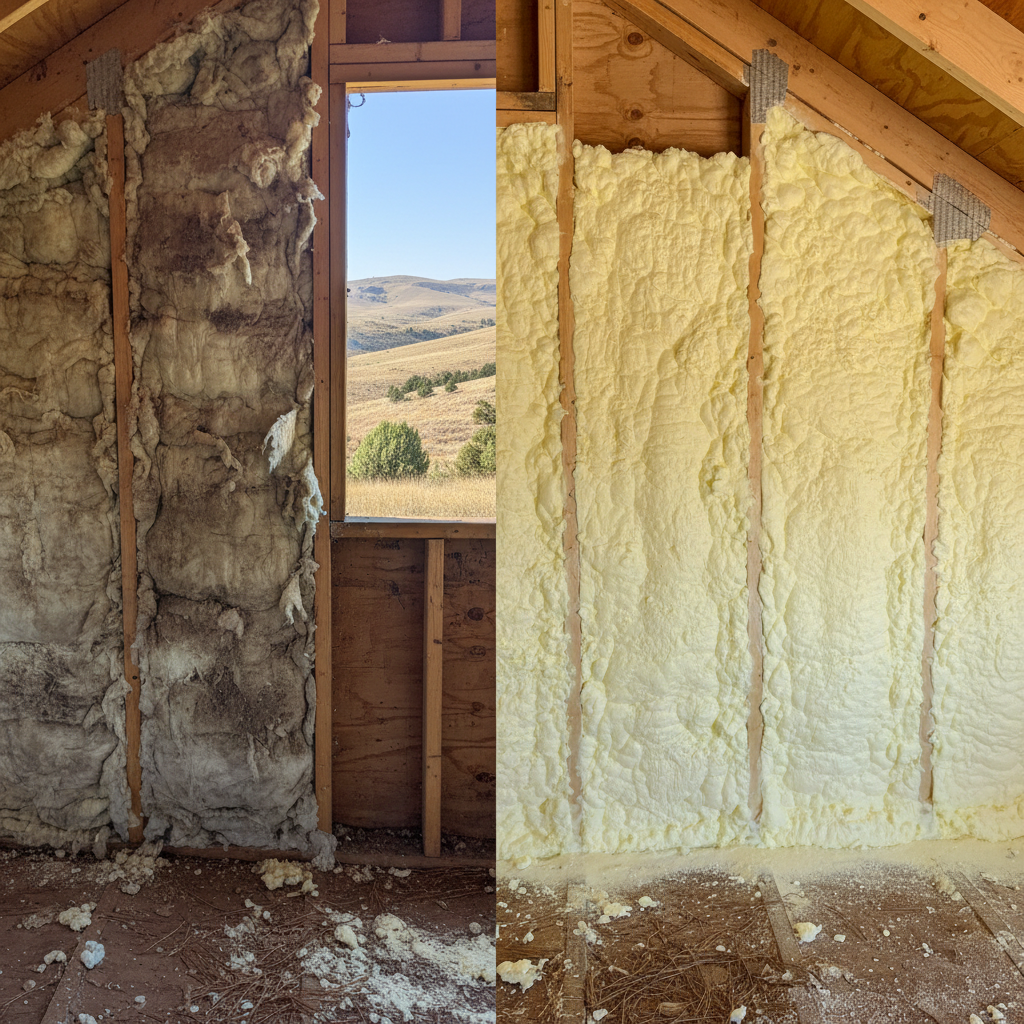
You're looking into open cell spray foam, that's smart. It's a fantastic insulation choice for a lot of Boise homes, especially when you're trying to seal up an attic or a crawl space and really boost your energy efficiency. But here's something you might not realize: there are actually two main ways open cell foam gets applied, and they're not interchangeable. We're talking about traditional open cell spray foam versus what's often called 'pour-in-place' open cell foam. Let's break down what you need to know.
Traditional Open Cell Spray Foam: The Gold Standard
When most folks think of spray foam, this is what they picture. It's a two-part liquid that gets mixed at the nozzle of a specialized gun, then sprayed directly onto the surface – usually the underside of your roof deck, wall cavities, or rim joists. As it hits the surface, it expands rapidly, filling every nook and cranny, creating a seamless, airtight barrier.
Cost: Generally, traditional open cell is more cost-effective per square foot than closed cell, but it does require specialized equipment and skilled applicators. It's a significant investment, but the energy savings usually pay you back over time.
Durability: Once cured, it's incredibly durable. It won't settle, sag, or degrade over time like some other insulation types. It adheres permanently to the structure, adding a bit of rigidity too. It's not going anywhere.
Maintenance: Practically zero. Once it's in, it's done. You don't need to worry about it. Just keep it dry, which is true for any insulation.
Appearance: It looks like a soft, spongy, usually off-white material that completely fills the cavity. It's pretty uniform and clean when applied correctly. It's not meant to be exposed in living spaces, but in an attic or crawl space, it looks good.
Best Use Cases: Attics (especially unvented attics), wall cavities in new construction or major renovations, and rim joists. It's excellent for sealing up those older homes in the North End or Hyde Park that are notoriously drafty.
Pour-in-Place Open Cell Foam: A Niche Solution
Now, pour-in-place open cell foam is a different beast. Instead of spraying it directly onto a surface, this type of foam is designed to be poured into enclosed cavities, like an existing wall that you don't want to tear open. It's a lower-pressure application and expands more slowly, flowing to fill the space.
Cost: This can be a bit trickier. While the material itself might seem similar, the application process can be more labor-intensive for certain situations. You're often drilling holes into walls, injecting the foam, and then patching. This can drive up the overall cost compared to spraying an open cavity.
Durability: Once cured, it's still very durable, just like its spray-applied cousin. It won't settle or sag within the wall cavity. The main durability concern isn't the foam itself, but ensuring the cavity is completely filled without voids, which can be harder to verify with a pour-in application.
Maintenance: Again, very low. Once it's in the wall, you don't touch it. The biggest 'maintenance' would be making sure the exterior patching is done well if you had to drill holes.
Appearance: You don't see it. That's the whole point. It's hidden inside your walls. The appearance concern here is more about the quality of the patching job if you're retrofitting existing walls.
Best Use Cases: This is primarily for existing homes where you want to insulate wall cavities without removing drywall. Think of those older stucco homes in the Bench area where tearing out walls is a huge, expensive mess. It's a great option for retrofits where access is limited.
Which One for Your Boise Home?
For most situations, especially if you're building new or doing a major renovation where you have open access to cavities, traditional open cell spray foam is almost always the better choice. You get a more consistent, verifiable application, and it's typically more efficient to install.
However, if you've got an existing home with uninsulated walls and you absolutely do not want to tear out drywall, then pour-in-place open cell foam becomes a really valuable option. It lets you upgrade your insulation without the massive disruption and cost of a full gut job.
Here in Boise, we see a lot of older homes with uninsulated walls. The winters can get pretty cold, and our summers are brutal. Upgrading insulation is one of the best investments you can make. Knowing these two approaches means you can pick the right tool for your specific job.
At Spray Foam Pros of Boise, we work with both types, but we're always going to recommend the method that gives you the best performance for your dollar and your situation. We'll walk you through the pros and cons for your specific project. Don't just assume one size fits all when it comes to spray foam; it really doesn't.